Don’t Let Gutters Wait
5 Costly Gutter Repair Mistakes That Can Ruin Your Home’s Foundation
Avoid These 5 Gutter Mistakes Before Foundation Damage Strikes
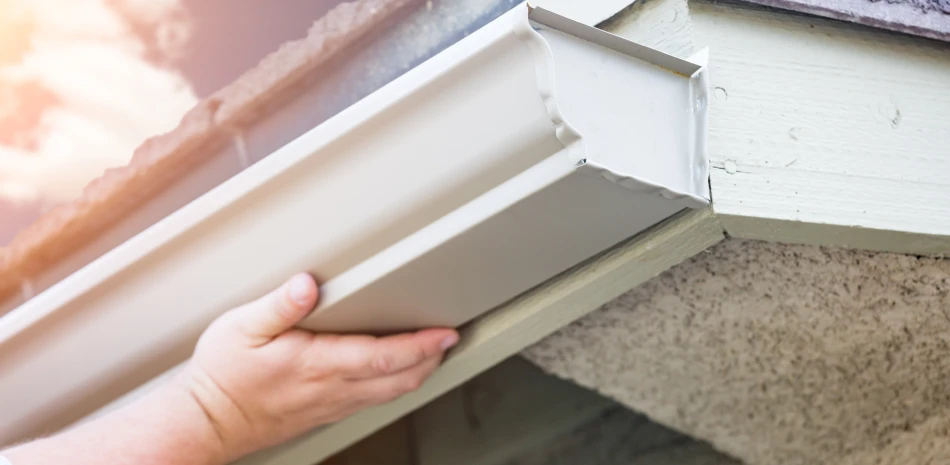
Waiting for Visible Damage Before Acting on Gutter Issues
The most common and destructive error homeowners make is waiting until visible damage appears before scheduling repairs. By the time water stains mark your exterior walls or you notice pooling around your foundation, the problem has likely existed for months. In the San Francisco Bay Area, where winter storms deliver concentrated rainfall between November and March, even a small section of damaged gutter can divert thousands of gallons away from your drainage system and directly against your foundation.
This delay proves particularly costly because foundation damage progresses in stages. Initially, soil saturation causes minor settling. Over subsequent months, hydrostatic pressure builds against foundation walls, creating hairline cracks that expand with each rain cycle. What begins as a $200 gutter repair becomes a $5,000 foundation stabilization project simply because homeowners assume their drainage system will continue functioning despite obvious deterioration.
Many property owners in areas like Hayward and Livermore discover this mistake after noticing interior signs: basement moisture, door frames that no longer close properly, or cracks in drywall near corners. These symptoms indicate that foundation movement has already occurred. The original gutter issue, perhaps a separated seam or clogged downspout, required minimal intervention months earlier, but the cascading structural damage now demands comprehensive remediation.
Scheduling an inspection at the first sign of gutter malfunction prevents this escalation. When downspouts drip between sections, when water overflows during moderate rain, or when you observe rust spots on steel components, the system is communicating failure. Responding immediately with professional gutter services protects the significant investment you’ve made in your property and avoids the exponentially higher costs that follow foundation compromise.
Patching Individual Problems Without System Evaluation
Homeowners frequently address gutter problems in isolation rather than evaluating the entire drainage system. This piecemeal approach might seal a leak or replace a single section, but it fails to identify the underlying cause or related vulnerabilities. In coastal regions throughout the Bay Area, salt-laden air accelerates corrosion in fasteners and seams, meaning that if one section shows failure, adjacent areas likely face similar stress.
The limitation of patch repairs becomes evident during the next significant weather event. A homeowner fixes a separated joint in October, then discovers during January storms that water now overflows from a different location. The original repair held, but the system’s capacity or pitch was inadequate from the start. Each isolated fix costs $150 to $300, yet the home still lacks functional protection. A systematic assessment would have revealed that the entire gutter run required adjustment or replacement, solving the problem definitively for a marginally higher initial investment.
This mistake also overlooks how components interact. Gutters, downspouts, fascia boards, and ground-level drainage extensions function as an integrated system. Repairing gutters without verifying that downspouts discharge at least six feet from the foundation leaves half the problem unresolved. Water still accumulates near structural supports, saturating soil and creating the conditions for settlement. Properties in areas with clay-heavy soils, common in Manteca and surrounding communities, face particularly severe consequences because saturated clay expands and contracts, exerting destructive force against foundation walls.
A thorough evaluation examines pitch consistency, fastener integrity, capacity relative to roof area, and discharge points. This approach identifies problems before they manifest as emergencies and ensures that repairs address root causes rather than symptoms. Working with experienced gutter installation contractors who assess the complete system delivers long-term protection and eliminates the cycle of repeated emergency repairs that never fully resolve drainage deficiencies.
Installing or Repairing Gutters Without Correct Slope
Incorrect pitch represents one of the most overlooked yet consequential gutter repair mistakes. Gutters must slope toward downspouts at a precise grade, typically one-quarter inch per ten feet, to ensure water flows efficiently rather than pooling in sections. When repairs or replacements fail to maintain this specification, water accumulates, adding weight that stresses fasteners and creates standing moisture that accelerates material degradation.
The problem intensifies in the Bay Area’s Mediterranean climate, where long dry periods between November and March rainfall allow debris to settle in low spots. When storms arrive, this organic material blocks flow, causing water to spill over gutter edges and cascade directly against your home’s exterior. The resulting saturation follows the path of least resistance, typically channeling toward the foundation where soil absorption proves slowest. Over multiple rain cycles, this concentrated flow erodes soil adjacent to footings and creates voids that compromise structural support.
Homeowners often fail to recognize pitch problems because gutters appear functional during light rain. Only during heavy downpours does the inadequate slope become apparent, by which point water may already be entering basement spaces or saturating crawl spaces beneath the structure. Properties built on sloped lots face compounded risk, as gravity naturally directs water toward the downhill foundation wall where pooling occurs if gutters don’t channel flow away effectively.
Correcting pitch issues requires more than casual adjustment. Installers must account for fascia condition, rafter spacing, and thermal expansion characteristics of gutter materials. Aluminum expands and contracts with temperature changes, so fastener placement must accommodate movement without allowing sag. Steel systems require consideration of weight distribution, particularly in areas prone to heavy leaf accumulation from the Bay Area’s abundant oak and eucalyptus trees. Qualified gutter repair services bring the measurement tools and experience necessary to establish proper slope, ensuring that your drainage system performs correctly under all weather conditions and protects your foundation from water intrusion year after year.
Combining Incompatible Materials During Repairs
Combining incompatible materials during gutter repairs creates galvanic corrosion, a chemical reaction that rapidly degrades metal components and leads to system failure. This occurs most commonly when homeowners or inexperienced contractors attach aluminum gutters with steel fasteners, or mix copper and aluminum components. The dissimilar metals create an electrochemical cell in the presence of moisture, accelerating oxidation and weakening structural connections within months rather than the years properly matched materials would provide.
The Bay Area’s coastal environment intensifies this problem significantly. Salt particles suspended in marine air settle on gutter surfaces and retain moisture, maintaining the electrolyte conditions necessary for galvanic reactions even during dry months. Properties within fifteen miles of the Pacific coastline face particularly aggressive corrosion rates. A repair that might survive five years in an interior location fails within eighteen months when subjected to salt exposure, leaving homeowners with recurring expenses and persistent drainage failures.
Material incompatibility also affects sealants and fasteners. Applying standard silicone caulk to seal joints on gutters that will experience thermal cycling produces adhesion failure as materials expand and contract at different rates. Similarly, using roofing screws instead of gutter-specific fasteners creates oversized holes that allow movement, gradually enlarging openings until water leaks through mounting points and saturates fascia boards. This hidden deterioration compromises the structural support for your entire gutter system, often going unnoticed until sections detach during storms.
The solution requires attention to manufacturer specifications and building science principles. Aluminum systems demand aluminum or stainless steel fasteners with appropriate coatings. Sealants must be rated for metal-to-metal applications with flexibility to accommodate movement. Downspout extensions should match the gauge and material of the primary system to ensure uniform durability. Experienced contractors maintain inventory of compatible components and understand regional challenges like coastal corrosion and temperature variations between inland valleys and coastal zones. Investing in proper materials during repairs eliminates the false economy of cheaper alternatives that fail prematurely, requiring replacement alongside the foundation repairs necessitated by the water damage they failed to prevent. Working with qualified gutter companies ensures material compatibility and long-term system integrity.
This attention to detail becomes particularly important when integrating repairs into existing systems. Matching not just material type but also gauge thickness, finish quality, and fastener specifications ensures that repaired sections perform identically to original installation. The marginal cost difference between proper and improvised materials is negligible compared to the foundation damage costs that result from premature gutter failure, making specification compliance one of the highest-value decisions in any repair project.
Choosing Price Over Expertise When Selecting a Contractor
Combining incompatible materials during gutter repairs creates galvanic corrosion, a chemical reaction that rapidly degrades metal components and leads to system failure. This occurs most commonly when homeowners or inexperienced contractors fasten aluminum gutters with steel screws, or connect copper downspouts to galvanized steel sections. In the San Francisco Bay Area, where coastal salt spray accelerates corrosion processes, these material mismatches can fail in as little as eighteen months rather than the decades a properly matched system would last.
The damage pathway starts small but compounds quickly. When dissimilar metals contact each other in the presence of an electrolyte such as rainwater, the less noble metal corrodes at an accelerated rate while the more noble metal remains protected. Homeowners notice the deterioration only after holes appear, joints separate, or entire sections collapse during winter storms. By that point, water has been infiltrating the foundation perimeter for months, saturating soil and creating hydrostatic pressure that cracks concrete and destabilizes footings.
The financial impact extends beyond the immediate repair cost. Foundation repairs resulting from prolonged water exposure typically range from eight thousand to thirty thousand dollars in the Bay Area, depending on the extent of structural compromise. Meanwhile, a complete gutter replacement using compatible materials costs a fraction of that amount. Professional gutter installation contractors prevent these cascading failures by specifying materials that work together chemically and mechanically, selecting fasteners, hangers, sealants, and connectors designed for the specific metals in your system.
Preventing material incompatibility requires understanding your existing system before any repair work begins. Aluminum gutters demand aluminum or stainless steel fasteners and pop rivets rather than galvanized steel. Copper systems require brass or copper hardware exclusively. Even seemingly minor components like end caps and elbows must match the base material to prevent electrochemical degradation. In regions with high humidity and salt exposure like the Bay Area, these specifications become even more critical because the accelerated corrosion timeline leaves less margin for error before foundation damage becomes irreversible.